
Here is the audio version of this blog post:
Scientists like to measure, label, and conceptualize natural behavior. Among such brilliant undertakings is the concept of intelligence quotient, more popularly known as IQ. Most of us have heard about IQ as a number indicating what we call intelligence. The higher the better. I’m pretty sure names like Albert Einstein or Elon Musk pop into your mind as you read this. That’s what Google suggests when I do a search. Google knows what people are searching for and shows related searches that you can do. Google is intelligent.
If you are among the top 2% of people scoring very well on two IQ tests called Stanford-Binet and Cattell you can become part of a high-IQ society called Mensa International. Wow, eh?
We associate a high IQ with being smart and living a high quality of life, don’t we?
In November 2023 I quit my job in IT as a senior team leader in a large international corporation. It was a well paid job with good benefits but I felt my managers breathing down my neck pushing the agenda of working harder to make my teams more efficient. I felt I had to sacrifice the well-being of my team members and I didn’t like that in any way. In the end, I sacrificed my own wellbeing.
Although my managers had the word ‘leader’ in their job title, it didn’t mean they were good at what they were supposed to be doing; leading, not managing. To me, there’s a world of difference.
In the summer of 2023 I participated in a 4-day ayahuasca workshop where it became clear that I needed to change my work life. I did get visions of my future but as with psychic predictions and dreams, they can be very symbolic and need interpretation or hindsight to understand. The South American jungle brew ayahuasca gives you what you need, not what you think you need. The shamans or curanderos call it a medicine for the soul and purging what no longer serves you is part of the cleansing process. And at that workshop I purged a lot.
Although I had become aware of the need for change in my work life, it took me a lot of time and introspection in the following months to finally decide to courageously quit without a backup plan. One of the first days of November I quit and I no longer wanted to be energetically connected with that workplace. I could have quit and called in sick during my notice period but that would not align with my values of being true to myself and being authentic. I got out of my contract within days opposed to a 2 month notice period.
The day after I quit, my intuition about my closest managers and their lack of empathy was confirmed. I received an impersonal “I wish you well” email that was clearly generated by a language tool like ChatGPT and copy-pasted without proof reading or personalizing it.
Some of my friends couldn’t relate to my decision and my reasons for quitting so suddenly. Surely I could have stayed during the notice period giving me time to find a new job and just cope. That would have been the intelligent way of handling the situation.
Intelligence again.
Pure intelligence isn’t everything.
IQ represents a measure of one’s cognitive or intellectual intelligence, indicating how well a person can use reasoning and logic to solve problems. Emotional intelligence (EQ), on the other hand, measures emotional intelligence, focusing on one’s ability to manage both their own and others’ emotions effectively. Social skills and empathy included. Both are valuable, and in many cases, EQ is considered equally if not more important than IQ in contributing to a person’s success and happiness in life. Emotional intelligence is a very big thing in leadership positions. According to hundreds of CEOs the most important intelligence is the emotional intelligence. IQ is needed to get the leadership job, and EQ is needed to make the organisation flourish.
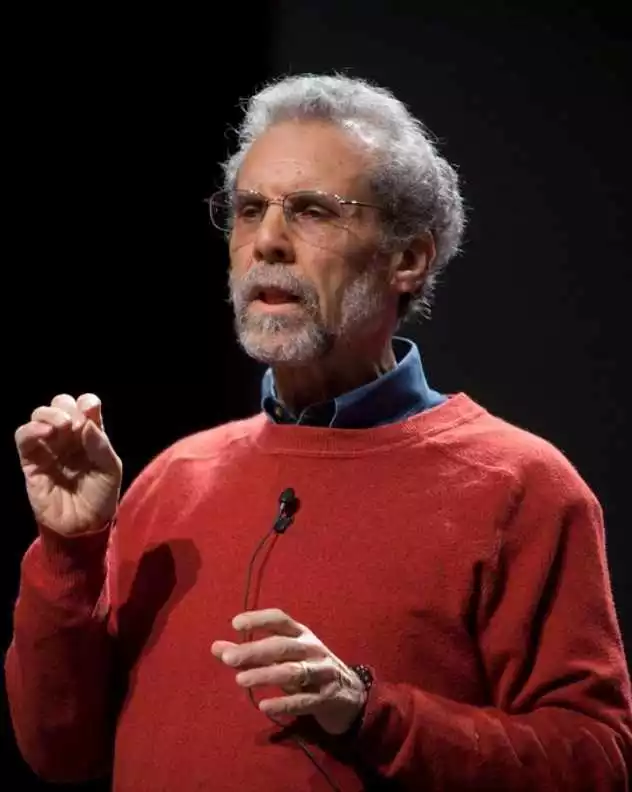
Daniel Goleman, an American psychologist, author, and science journalist worked at New York Times where he covered psychology, emotions, and the brain. Among his most known contributions to humanity is his work on emotional intelligence. It became a New York bestseller and his first book has since been translated to over 40 languages. Today his book is regarded as one of the top 25 most pivotal books in the realm of business management.
Recently I watched an interview where he was asked what to do if your boss has no EQ. First of all he advised not to tell your boss directly. Then he said there were two options only; Either give your feedback through an ally who is able to talk to your boss and who your boss respects. Or, get your boss’s resumé and send it to an executive recruiter and they might get a good job somewhere else. This last part I will remember going forward. I just wish I had heard about this ages ago. Very tangible and practical advice.
Best part about emotional intelligence is that contrary to IQ which stays roughly stable during a lifetime, emotional intelligence can be developed and enhanced through experience, reflection, and conscious practice.
Heck, there’s even something called Spiritual Intelligence, which I’ve just discovered recently.
Let’s peek into a little rabbit hole now, just for curiosity’s sake.

Have you ever heard about the work of Dolores Cannon? Her career as a hypnotherapist specializing in past life regression spanned almost 50 years. She has written extensively on topics covering reincarnation, ETs, and the nature of reality. Dolores invented a process called Quantum Healing Hypnosis Technique (QHHT).
https://dolorescannon.com/about-qhht/
She experienced a greater intelligence talking through the hypnotized people she was helping. That greater intelligence gave her small pieces of a larger puzzle with every client she hypnotized. She started gathering this information and found out that the greater intelligence continued where the previous clients left off. She gathered all that information into 19 books before leaving this dimension.
What I find fascinating about her work is that Dolores herself was not doing the channeling. She was not psychic or had first-hand experience with the non-physical world herself. It was her clients that relayed the information independently of each other. To me that gives the information a lot of credibility.
One of the topics I find mind blowing is the concept of backdrop people. In short, the greater intelligence said that there are people among us who are here only to make this world look inhabited. They have very few functions if any at all. You see them at the mall, people you don’t know, people you observe when you’re having your cafe latte at your favorite café. You see them but you don’t interact with them.
I found this article interesting: https://daily-spirit.com/2017/10/30/backdrop-people-backfill-people-whats-wrong-with-humans/
If you’re familiar with the movie The Matrix, there’s a scene where Neo learns about the nature of the simulated computer reality he lives in that they call the Matrix. Through a computer program and a plug in his head, his consciousness is transported into a simulated training reality. He finds himself walking among people in a busy street. His attention is quickly drawn to a beautiful woman in a red dress. Neo is distracted and doesn’t see the larger picture. None of the people he sees are real and that includes the woman in the red dress.
If you are familiar with computer games, there’s a term called NPCs or non-playing-characters. A computer generated character visually put in place by the game programmers to enhance the game play. To make the game entertaining.
Take a quick watch of the trailer for the movie Free guy.
Let’s look at this from a scientific perspective.
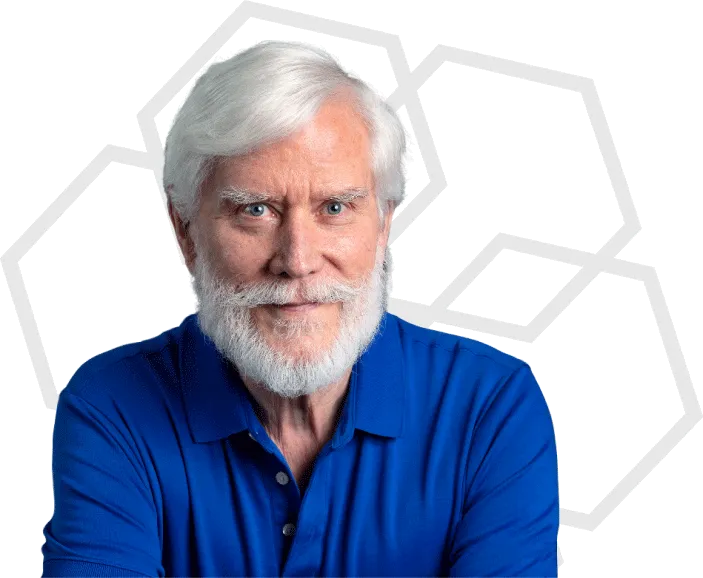
Let me introduce Tom Campbell. He is a nuclear physicist who worked at NASA, who has done more than 50 years of drug-free research into altered states of consciousness. He has worked extensively together with Robert Monroe, the founder of the Monroe Institute, where they both explored consciousness and the nature of our reality.
You might want to know more about Tom’s work with binaural beats which is sometimes called brain wave entrainment technology. Hemi-Sync is one of them.
Using scientific evidence and through systematic exploration of his own consciousness, Tom has been able to develop a scientific model of reality explaining how and why the physical world only exists in our minds.
If you want to explore this, go to his website and read more about TOE – The theory of everything.
https://www.my-big-toe.com/
Oh no, what are the implications if this is true?
Take a step back.
Relax and breathe. Feel the beating of your heart in your chest. Take a sip of water.
Re-focus.
This technique, by the way, is one way to develop your emotional intelligence. Self-management and self-awareness is key.
I believe we are eternal, immortal, infinite, and universal beings having a human experience. We are here on the Earth plane to discover ourselves and right now we are wearing a space suit called a human body.
Graham Hancock, a British writer and critical thinker, says “We truly are a species with amnesia. We have forgotten a very important part of our story.”
Ram Das said we are pure awareness and love.
We are souls having a human experience, is another one.
Philosophers, poets, and artists have different ways of expressing this.
On my podcast Transcending the Veil, I had a discussion recently with my friend and co-host Nils on spirituality. Here is the link to episode #032 The Nature of Reality: Insights into Spirituality with Claus and Nils:
Lastly I want to quote Tom Campbell from his website:
“Is this a load of nonsense? Where is the evidence? Isn’t consciousness created by the brain? How can one guy alone come up with a Big Theory of Everything?
Skepticism is the right approach. Don’t believe anything. My Big TOE is not about belief. It’s about scientific evidence, radical rationalism and first-hand experience.
But be open-minded. Always question your own assumptions. Disbelief is just another kind of belief. Consider the possibility that reality is stranger than you ever thought.”
Tom Campbell